

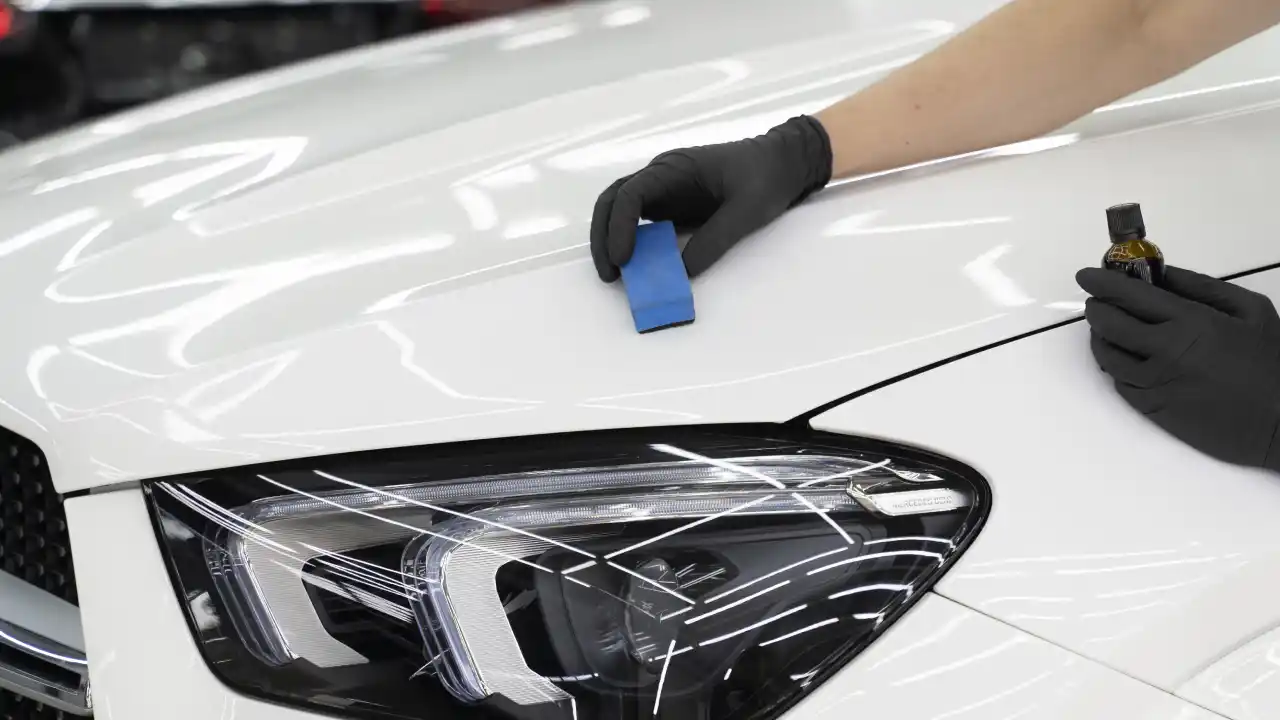
Ceramic coating for automotive applications has evolved from a luxury indulgence for car enthusiasts into a practical necessity for vehicle owners navigating Singapore’s punishing tropical environment. In a city-state where temperatures regularly exceed 32°C and humidity levels hover around 84%, traditional paint protection methods crumble under the relentless assault of equatorial weather, UV radiation, and urban pollutants.
The science is unambiguous: Singapore’s climate represents one of the world’s most challenging environments for automotive paint preservation. The Meteorological Service Singapore reports that the island receives an average of 2,340 hours of sunshine annually, with UV index levels frequently reaching “extreme” ratings of 11 or higher. This solar bombardment, combined with acid rain from industrial pollution and salt-laden air from surrounding waters, creates a perfect storm for paint degradation.
The Chemistry of Protection in Extreme Conditions
Ceramic coating for automotive functions as a molecular shield, creating a semi-permanent barrier between your vehicle’s paint and Singapore’s hostile environment. Unlike traditional waxes or sealants that merely sit atop the paint surface, ceramic protective coatings form covalent bonds with the clear coat, creating a unified protective layer that can withstand temperatures exceeding 1,000°C.
The chemical composition typically involves silicon dioxide (SiO2) or titanium dioxide (TiO2) suspended in a liquid carrier. When applied, these compounds cross-link to form a crystalline structure that exhibits remarkable properties:
- Hydrophobic behaviour: Water contact angles exceeding 110°, causing rain and contaminants to bead and roll off
- Chemical resistance: Protection against acid rain, bird droppings, and industrial fallout
- UV stability: Prevents paint oxidation and colour fading from prolonged sun exposure
- Thermal stability: Maintains integrity despite Singapore’s extreme temperature fluctuations
The Building and Construction Authority’s studies on urban heat islands reveal that surface temperatures in Singapore can reach 60°C during peak hours. Traditional paint protection systems fail catastrophically under such conditions, whilst properly applied car ceramic coatings maintain their protective properties.
Economic Rationality in a Depreciating Asset Market
Singapore’s automotive market presents unique challenges that make paint protection coatings economically compelling:
- Investment protection: COE prices averaging S$106,000 mean total car investments exceed S$200,000
- Resale value: Proper paint maintenance preserves up to 15% of vehicle value over 10 years
- Cost comparison: Ceramic coating (S$1,500-3,000) vs paint restoration (S$8,000-15,000)
- Household impact: Transport represents 15.1% of average family expenditure
- Long-term savings: Ceramic protection lasts 2-5 years vs monthly waxing (S$80-150 per session)
The Technological Evolution of Surface Protection
Modern automotive ceramic treatments represent the convergence of nanotechnology and materials science. Traditional protection methods relied on organic compounds that degraded rapidly under UV exposure and chemical attack. Contemporary formulations employ inorganic nanoparticles that remain stable under extreme conditions whilst providing superior performance characteristics.
The evolution has been remarkable:
- First generation: Basic silicone-based treatments lasting 6-12 months
- Second generation: Hybrid formulations combining organic and inorganic components
- Third generation: Pure ceramic formulations with 2-5 year durability
- Fourth generation: Multi-layered systems with specialised base coats and topcoats
Singapore’s National Research Foundation has invested heavily in advanced materials research, recognising the strategic importance of surface protection technologies in tropical environments.
Application Considerations in Singapore’s Climate
The island’s climate creates specific challenges for ceramic coating application that require professional expertise. Humidity levels exceeding 80% can interfere with proper curing, whilst temperature variations between air-conditioned workshops and outdoor conditions can cause application defects.
Professional application requires controlled environments and follows specific protocols:
- Environment: Temperature 20-25°C, humidity 40-60%
- Surface preparation: Multi-stage paint correction to remove contamination
- Priming: Base layer application for enhanced adhesion
- Coating application: Precise ceramic layer application using specialised techniques
- Curing: Controlled heating and time-based cross-linking processes
The Singapore Vehicle Traders Association reports that improperly applied coatings fail within 6-12 months, highlighting the importance of professional installation over DIY approaches.
Environmental and Health Considerations
Singapore’s environmental regulations and health considerations favour ceramic coatings:
- VOC compliance: Minimal volatile organic compounds vs traditional solvent-based systems
- Health safety: Chemically inert once cured, no ongoing health risks
- Regulatory approval: Meets National Environment Agency standards
- Environmental impact: Reduced chemical runoff and packaging waste
The Maintenance Revolution
Vehicle ceramic protection fundamentally transforms maintenance routines. Traditional washing methods that rely on abrasive actions and chemical detergents become unnecessary and potentially harmful. The hydrophobic properties of ceramic surfaces allow contamination to be removed with minimal mechanical action.
Maintenance protocols shift from aggressive cleaning to gentle preservation:
- Weekly washing: Simple water rinse with pH-neutral soap
- Monthly maintenance: Light cleaning with specialised ceramic-safe products
- Annual inspection: Professional assessment of coating integrity
- Occasional enhancement: Application of ceramic booster products
Market Maturation and Consumer Education
Singapore’s automotive protection market has evolved significantly:
- Educated consumers: Demand evidence-based solutions over marketing claims
- Regulatory oversight: Competition and Consumer Commission guidelines require clear disclosure
- Industry standards: Professional associations provide education on proper techniques
- Quality improvement: Knowledge democratisation has elevated service standards
- Consumer protection: Reduced prevalence of substandard products
Future Developments and Technological Convergence
Research into self-healing coatings, enhanced hydrophobic properties, and anti-microbial treatments suggests future ceramic protection will offer capabilities beyond paint preservation. Singapore’s position as a regional technology hub allows local consumers to access cutting-edge developments ahead of other markets.
Conclusion: The New Standard of Vehicle Care
Singapore’s extreme climate has rendered traditional automotive protection methods obsolete, whilst simultaneously creating ideal conditions for ceramic coating technology to demonstrate its superiority. The combination of scientific evidence, economic rationale, and practical performance has established ceramic protection as the new baseline for responsible vehicle ownership.
For discerning vehicle owners who recognise that their automotive investment deserves protection commensurate with Singapore’s challenging environment, nano ceramic coating represents not merely an upgrade but an essential component of modern vehicle stewardship.
