

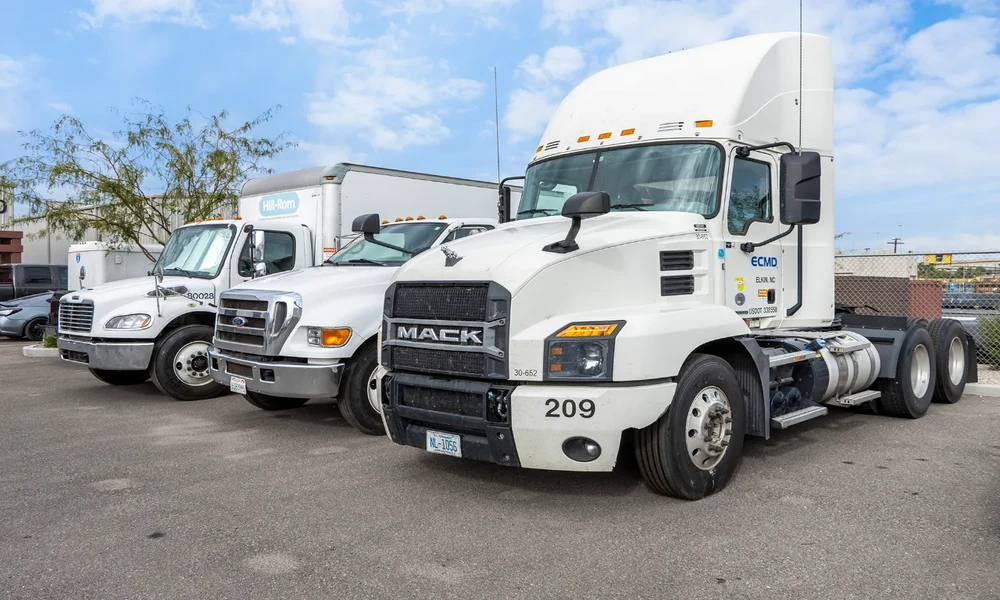
Truck downtime rarely starts at a convenient moment. For a fleet owner, body shop operator, or independent diesel repair business, one weak link in the powertrain can turn a scheduled route into a missed delivery, a delayed repair slot, or a stranded driver waiting on roadside service.
On Mack MP8-equipped trucks, the turbocharger carries a heavy workload. It helps the engine pull hard under load, hold speed on grades, and recover after stop-and-go traffic. When it performs well, the truck feels steady and predictable. When it starts to fail, the symptoms can spread fast through fuel economy, exhaust temperatures, driver confidence, and operating costs.
Demanding Routes Expose Weak Turbo Problems Fast
A truck may seem fine during a short local run, then struggle badly once the route gets tougher. Long grades, construction hauling, regional freight, heavy equipment transport, and winter driving all put more stress on the air and exhaust side of the engine.
A tired turbocharger may show up as slow acceleration, poor pulling power, extra smoke, unusual whining, oil leaks, or inconsistent boost. Those signs are easy to dismiss when the truck still moves, but waiting can raise the repair bill. A failing unit can send debris downstream, increase exhaust heat, strain related components, and force the truck out of service when the shop schedule is already full.
For businesses that depend on daily truck movement, the cost is not just the part. It is the missed load, the driver’s lost hours, the emergency tow, and the customer who starts looking for a more reliable vendor.
Performance Is Also a Scheduling Issue
A reliable turbocharger is not only about horsepower. It affects how confidently a truck can stay on schedule.
A concrete contractor hauling forms across town, a regional fleet crossing windy open highway, or a repair shop moving heavy vehicles between locations all need predictable power. If the truck cannot climb, merge, or recover under load, the driver has fewer options and the business has less control over the day.
That matters most during seasonal pressure. Spring construction, summer paving, fall agricultural hauling, and winter recovery work can compress more revenue into a few critical months. A truck that loses power during those windows may cost far more in lost opportunity than it would have cost to address the problem earlier.
Choosing the Right Replacement Protects More Than Power
When replacement becomes necessary, fit and quality matter. A turbocharger that matches the engine’s needs helps preserve response, manage heat, and keep the truck working inside the range it was built for. The wrong choice can create new problems, especially on trucks that already operate under heavy loads or long idle periods.
Owners comparing options should look beyond the cheapest available unit. A properly matched Mack MP8 Turbo can help restore the steady pulling performance that drivers expect from these trucks while supporting uptime for the business behind them.
That decision is especially important for fleets that standardize parts across multiple trucks. Consistency helps repair teams diagnose issues faster, stock smarter, and reduce the guesswork that often slows maintenance down.
Repair Shops Should Treat Symptoms as Business Signals
For auto body and truck repair businesses, turbo-related complaints are an opportunity to protect the customer’s operation, not just sell a repair. When a customer mentions low power, smoke, noise, or higher fuel use, the conversation should connect the symptom to the real-world cost of downtime.
A practical inspection can include checking boost behavior, oil contamination, intake and exhaust connections, actuator function, charge air leaks, and related fault codes. Even when the turbocharger is not the only issue, this process gives the customer a clearer picture of what is happening before the truck fails on a route.
That kind of communication builds trust. Business owners do not want vague warnings. They want to know whether the truck can finish the week, whether a repair can wait until the next service window, and what risk they take by delaying.
Uptime Comes From Fixing Problems Before the Route Decides
Heavy-duty trucks earn their keep by moving loaded, on time, and without drama. A strong turbocharger helps make that possible by supporting clean power, steady boost, and dependable drivability under real working conditions.
For owners and shops responsible for Mack MP8-equipped trucks, the smartest approach is simple: take performance changes seriously, inspect before failure spreads, and choose replacement parts that match the demands of the route. That keeps drivers safer, customers served, and revenue-producing trucks where they belong – on the road.
